
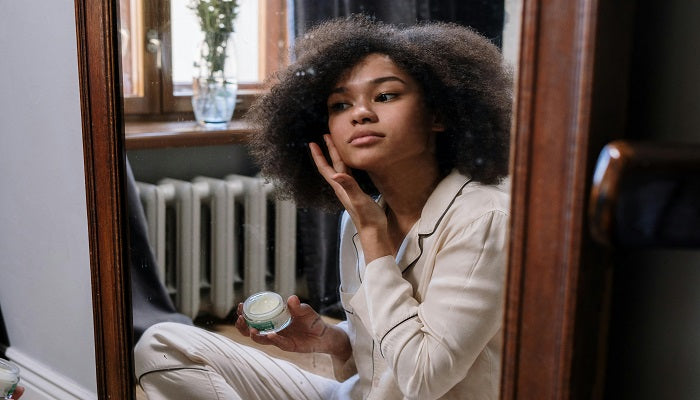
Right after washing, your curls look defined, bouncy, and full of elasticity. But by the next day, they start to become frizzy, dry, and even flat. Sometimes your scalp feels tight and itchy, while your hair remains dry and split at the ends. In order to maintain curl definition, we constantly try new haircare products, styling methods, and routines, yet the results always seem unstable. This is not your fault.
The structure of curly hair itself makes it more prone to dehydration. The curved strands make it difficult for the natural oils secreted by the scalp to distribute evenly to the ends, so the hair becomes drier more easily. At the same time, the scalp may become sensitive and imbalanced due to improper cleansing, product buildup, or external irritation.
Many people focus on“how to make curls more defined”but overlook a more fundamental issue—whether the scalp is healthy. In fact, what truly determines the condition of curly hair is not just the hair strands themselves, but the scalp environment. A healthy scalp is the key foundation for stable curl definition, reduced frizz, and maintained elasticity.
If you feel that your curls are always difficult to keep in ideal condition, perhaps it is time to shift your attention from the hair strands to the scalp.
Why Is Scalp Health So Important?
The scalp is not just the “surface” that holds hair, it is essentially a piece of skin tissue rich in hair follicles, sebaceous glands, and microcirculation. Every strand of hair grows from a follicle, and the health of the follicle directly affects the strength, elasticity, and overall texture of the hair.
When the scalp environment is balanced, follicles can steadily provide nutritional support to the hair strands, and oil secretion remains at an appropriate level—neither excessively dry nor overly oily. However, once the scalp barrier is damaged or oil secretion becomes imbalanced, dryness, itchiness, sensitivity, increased dandruff, and even disruption of the hair growth cycle may occur. Long-term neglect of scalp health often results in hair becoming fragile, dull, and losing its original elasticity and vitality.
For curly hair, scalp health is even more crucial. The natural curved structure of curls makes it difficult for scalp oils to travel evenly down the strands, so the hair becomes dry more easily. If the scalp itself is also in an unstable condition, such as being affected by external irritation or improper cleansing, issues like frizz, flattening, and loss of elasticity will become more pronounced. In other words, the appearance of curls depends not only on styling products, but also on whether the scalp is in a healthy and stable condition.
You can think of the scalp as soil. Only when the soil is fertile and the environment stable can plants grow healthily. Similarly, only when the scalp barrier is intact and the microenvironment balanced can hair display natural strength and elasticity from the root. Long-lasting improvement in hair quality does not begin with repairing the ends, but with caring for the scalp.

How to Maintain Scalp Health?
The key to maintaining a healthy scalp for curly hair is to establish a gentle, balanced routine that can be sustained long term. Curly hair is naturally more prone to dryness, so the core of scalp care is not “the more you cleanse, the better,” but rather avoiding over-cleansing while maintaining oil and moisture balance.
1. Control Washing Frequency and Avoid Over-Cleansing
Although shampooing removes dirt and excess oil, it also strips away the natural oils needed to keep the scalp and hair healthy. For curly hair, frequent washing can easily lead to dryness, tightness, and frizz. Whether you need to wash daily depends on your scalp type. If your scalp becomes noticeably oily within a day, it is likely oily. If your hair remains non-greasy after several days but your scalp feels dry and tight, it is more likely dry.
Generally, wavy hair can be washed every other day, while curly or coily hair can go longer, even up to once a week. However, regardless of hair type, you should cleanse at least once a week to keep the scalp fresh. If dandruff is present, apply anti-dandruff shampoo only to the scalp, leave it on for a few minutes before rinsing, and then use a moisturizing shampoo on the rest of the hair to reduce dryness and irritation.
2. Choose Gentle Formulas and Avoid Harsh Ingredients
Curly hair is relatively fragile. Strong cleansing shampoos containing sulfates can excessively remove oils, making the scalp and hair drier. Reading ingredient labels is important, and sulfate-free, moisturizing shampoos are preferable. In dry weather, additional hydration is necessary, such as doing a deep conditioning treatment once a week. Apply the treatment evenly to both scalp and hair to help repair the lipid layer and reduce inflammation and tightness.
Between washes, you can use leave-in conditioner or lightweight hair oil to maintain moisture. Curly hair requires continuous hydration rather than occasional intensive cleansing.
3. Control Water Temperature and Steam Environment
Water temperature during washing also affects scalp condition. Very hot water removes protective oils, dries out the scalp, and causes the hair cuticle to open, increasing frizz. Lukewarm water helps maintain the integrity of the scalp barrier.
A moderate steam environment can actually benefit the scalp. Warm steam helps open pores, promote blood circulation, and allow hair to absorb moisture and care products more effectively. The key is to avoid excessively high temperatures and maintain a comfortable level of warmth.
4. Gentle Detangling and Daily Protection
Curly hair tangles easily. Forceful brushing when dry can pull on the scalp and cause breakage. It is recommended to detangle when the hair is damp and coated with leave-in conditioner, using fingers or a wide-tooth comb, starting from the ends and gradually working upward.
Nighttime care is equally important. Reducing friction from cotton pillowcases, choosing smoother materials, or loosely tying the hair can help minimize frizz and pulling, allowing the scalp to remain relaxed overnight.

Does Water Quality Impact Curly Hair?
While establishing a good haircare routine, there is another frequently overlooked factor—water quality. Hard water contains high concentrations of minerals such as calcium, magnesium, and iron. Long-term washing with hard water not only makes shampoo harder to lather and rinse thoroughly, but also causes mineral buildup on the scalp and hair surface. These residues can make the scalp feel dry and itchy and may worsen sensitivity.
For curly hair that is already prone to dryness, hard water is more likely to make strands rough, lift the cuticle, increase tangling, and interfere with moisture absorption. Even if you choose gentle shampoos, if your scalp is exposed to irritating water every day, it is difficult for the scalp environment to truly stabilize.
Therefore, improving water quality at the source is an important step in maintaining scalp health for curly hair. Using a filtered showerhead can help reduce hard minerals and impurities in the water, lowering scalp irritation and making the cleansing process gentler.
For example, a filtered showerhead like AquaNurture can effectively reduce mineral residue in water, so the scalp no longer bears additional burden during cleansing. When water becomes gentler, the scalp can more easily maintain balance, and curls can appear softer and more elastic.
FAQ: How to Care for Curly Hair and Maintain a Healthy Scalp
Q1. Is scalp health more important for curly hair?
Yes. Scalp health is especially important for curly hair because curls are naturally drier than straight hair. The curved structure of curly strands makes it harder for natural oils to travel from the scalp down to the ends. If the scalp is dry, irritated, or imbalanced, curls are more likely to become frizzy, dull, or lose definition. A healthy scalp creates the right foundation for stronger, more resilient curls.
Q2. How often should you wash curly hair to keep your scalp healthy?
It depends on your scalp type. If your scalp becomes oily within a day, you may need to wash every 1–2 days. If it feels dry or tight and doesn’t produce much oil, washing every 4–7 days may be more appropriate. Overwashing can strip essential oils and worsen dryness, while underwashing can lead to buildup and scalp irritation. The key is balance rather than following a strict rule.
Q3. Can hard water affect curly hair and scalp health?
Yes. Hard water contains minerals like calcium and magnesium that can accumulate on both the scalp and hair. This buildup may make curls feel rough, increase frizz, and reduce moisture absorption. Over time, it can also leave the scalp feeling dry or itchy. Reducing mineral exposure—such as by using a filtered showerhead—can help maintain a more balanced scalp environment.
Q4. How can I tell if my scalp is healthy?
A healthy scalp typically feels comfortable—neither excessively oily nor tight and dry. It should not have persistent itchiness, redness, or heavy flaking. Your curls should also respond well to moisture and styling. If your scalp feels balanced and your curls maintain softness and elasticity, it’s a good sign your scalp environment is stable.
Q5. Does steam help curly hair and scalp?
Moderate steam can be beneficial. Warm, humid air may help open the hair cuticle temporarily, allowing moisture and conditioning products to penetrate more effectively. It can also promote circulation in the scalp. However, extremely hot water should still be avoided, as it can strip protective oils and increase dryness.
Q6. What is the best first step to improve curly hair scalp health?
Start by simplifying and stabilizing your routine: adjust your washing frequency, switch to gentle products, and use lukewarm water. If you live in a hard water area and continue experiencing dryness or buildup, addressing water quality may be an important next step. Supporting the scalp environment consistently will naturally improve curl definition and overall hair texture over time.
Leave a comment
This site is protected by hCaptcha and the hCaptcha Privacy Policy and Terms of Service apply.