
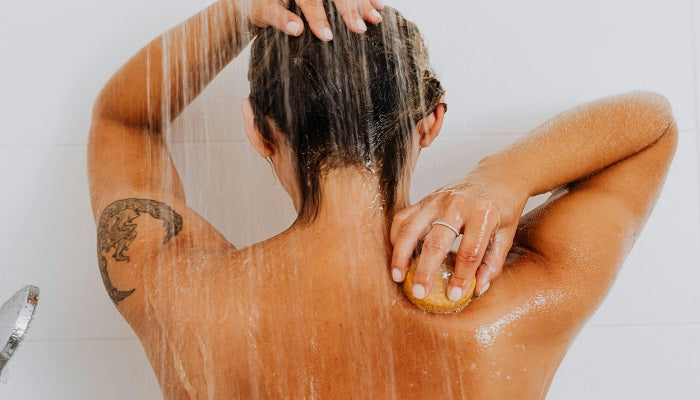
When people experience dryness, sensitivity, or tightness after showering, their first instinct is often to switch skincare products. Rarely do they consider that the issue may begin the moment they step into the shower. Showering is not just a cleansing routine; it is an integral part of your overall skin care. The way water flows over your skin — its pressure, distribution, and temperature — can subtly but significantly influence your skin’s condition.
The surface of the skin contains a natural protective structure commonly known as the skin barrier. Its role is to lock in moisture and defend against external irritants. When water is delivered in a highly concentrated stream or at excessive pressure, the repeated impact can strip away more of the skin’s natural oils, making dryness and tightness more likely. If this is combined with higher water temperatures, the effect becomes even more pronounced. Hot water softens the lipid structure in the outermost layer of the skin, allowing moisture to escape more easily, while forceful water flow accelerates this process. Over time, the skin may become increasingly sensitive, and symptoms such as itching or redness after showering may begin to appear.
At the same time, water quality itself plays an important role. Minerals found in hard water can leave residue on the skin’s surface, while chlorine commonly present in tap water has oxidative properties that may contribute to dryness and irritation. When water hits the skin in a high-pressure, concentrated stream, these substances come into more direct contact with the surface. For individuals who already have dry or sensitive skin, the effects can be more noticeable.
For this reason, it is not an exaggeration to say that shower mode affects the skin. Water pressure, flow distribution, temperature, and water quality work together to determine how much moisture your skin loses during cleansing and how much additional stress it experiences. In other words, the way you shower each day is quietly shaping your skin’s condition.

Recommended Shower Modes for Different Skin Types
Dry Skin
Dry skin naturally produces less oil, which makes the skin barrier more vulnerable to external irritation. If you consistently use strong, concentrated water streams, more of the skin’s natural oils can be stripped away, making tightness, flaking, and even itching more noticeable after showering. For dry skin, it is generally better to choose a fine, dispersed rainfall setting or a gentle mist mode. These types of water flow distribute pressure more evenly across the skin, helping to complete basic cleansing while minimizing moisture loss. Using lukewarm water instead of hot water can further support overall skin comfort.
Sensitive Skin
Sensitive skin has a lower tolerance for external stimulation. Unstable water pressure or concentrated streams may easily trigger redness or stinging sensations. Pulsing or high-pressure massage modes can intensify this discomfort and are therefore not ideal for long-term use. A steady, evenly distributed, and softer flow pattern is typically more suitable, as it reduces repeated impact on specific areas of the skin. Additionally, if you live in an area with hard water or higher chlorine levels, filtration becomes especially important. Reducing irritants in the water itself is often more beneficial than simply lowering water pressure.
Oily Skin
Oily skin produces excess sebum and often requires more thorough cleansing. Moderate high-pressure streams or massage modes can help rinse away excess oil more effectively, particularly on areas like the back and shoulders where sweat and oil tend to accumulate. However, even oily skin should avoid prolonged exposure to very hot water combined with strong pressure, as this can disrupt the skin’s balance and potentially trigger increased oil production. A moderately strong flow, rather than sustained high pressure, is usually the more balanced approach.
Combination Skin
Combination skin often varies significantly across different areas of the body—for example, the back may be oilier while the arms or legs feel drier. This skin type benefits from a showerhead that allows flexible mode switching. Stronger water flow can be used briefly on areas that need deeper cleansing, while gentler settings are more suitable for drier areas to prevent excess moisture loss. Adjusting water flow according to different body zones is more targeted and effective than relying on a single setting for the entire shower.
Acne-Prone Skin
For individuals prone to back acne or body breakouts, it is important to maintain thorough cleansing without causing additional irritation. Water flow that is too weak may leave cleanser residue behind, while overly forceful streams can damage the skin barrier and aggravate inflammation. A moderate water pressure with evenly distributed flow is typically more appropriate, as it helps rinse away product buildup without creating excessive mechanical stress. At the same time, high levels of minerals or chlorine in the water may also affect acne recovery, which makes both water flow and water quality equally important considerations.

Does water quality affect skin condition?
No matter which shower mode you choose, the results may be significantly compromised if you overlook the impact of water quality itself. Many people pay close attention to water pressure and spray patterns, yet rarely consider that the water touching their skin every day contains varying levels of minerals, chlorine, and other impurities. Calcium found in hard water can leave residue on the skin’s surface, making it feel rough and dry.
Meanwhile, chlorine commonly present in tap water has oxidative properties that may weaken the skin barrier, making dryness and sensitivity more noticeable. Even if the water flow feels gentle, the skin may still struggle to maintain balance if the water itself is harsh. A truly ideal shower experience depends not only on how water contacts the skin, but also on whether the water itself is sufficiently mild. Water quality is often the overlooked yet crucial factor.
Since water repeatedly interacts with the skin during daily showers, improving the water itself often has greater long-term value than simply adjusting the spray mode. Compared with frequently switching skincare products or deliberately shortening shower time, reducing irritants at the source can be a more direct and stable solution. This is why more and more people are turning their attention to filtered showerheads.
The primary function of a filtered showerhead is not to change water pressure, but to reduce chlorine, heavy metals, and certain mineral residues through built-in filtration media, making the water gentler before it even reaches the skin. When the level of irritating substances in the water is lowered, symptoms such as post-shower tightness, dryness, itching, or redness may also improve, even without changing your overall shower routine. For those with dry or sensitive skin in particular, this adjustment can be more important than simply choosing a different spray setting. In other words, when the water itself becomes cleaner and milder, your shower becomes true care — not just cleansing.
If you're looking to improve your water quality at the source, a filtered option like the AquaNurture Filtered Shower Head can help reduce chlorine and heavy metals before they reach your skin, making every shower gentler and more supportive of a healthy skin barrier.

FAQ: The Relationship Between Shower Modes and Skin Types
Q1: Does shower pressure really affect your skin?
Yes, it can. Water that is too forceful may strip away natural oils and weaken the skin barrier over time, especially if combined with hot water. This can lead to dryness, tightness, and increased sensitivity. On the other hand, water flow that is too weak may not rinse away cleanser residue effectively. A balanced, evenly distributed flow is generally better for maintaining skin comfort.
Q2: What shower mode is best for dry skin?
Dry skin typically benefits from gentler settings such as rainfall or mist modes. These distribute water more evenly and reduce concentrated impact on the skin, helping minimize moisture loss during cleansing. Using lukewarm water instead of hot water also makes a noticeable difference.
Q3: Is a high-pressure shower bad for sensitive skin?
It can be. Sensitive skin tends to react more easily to mechanical stimulation. Concentrated jets or pulsing massage modes may trigger redness or stinging. A steady, soft flow pattern is usually more suitable, especially when paired with water that has reduced chlorine and mineral content.
Q4: What shower setting is best for oily or acne-prone skin?
Oily or acne-prone skin may tolerate moderate pressure better and can benefit from slightly stronger flow to help rinse away excess oil, particularly on the back and shoulders. However, prolonged high heat and extreme pressure should still be avoided, as they may disrupt the skin’s balance and worsen inflammation.
Q5: Can changing shower mode improve body acne?
Adjusting shower mode alone may not completely resolve body acne, but it can help. Using moderate, evenly distributed water flow helps ensure cleansers are fully rinsed without over-irritating the skin. Water quality also plays a role, as excess minerals and chlorine may contribute to dryness and barrier disruption.
Q6: Is water quality more important than shower mode?
Both matter, but water quality often has a more long-term impact. Even a gentle spray pattern cannot fully protect the skin if the water contains high levels of chlorine or hard water minerals. Ideally, shower mode and water quality should work together to support healthier skin.

Leave a comment
This site is protected by hCaptcha and the hCaptcha Privacy Policy and Terms of Service apply.